Article: Concrete Barrier vs. Water Jersey Wall Barriers
Concrete Barrier vs. Water Jersey Wall Barriers
Choosing the right barrier is an important part of keeping construction sites, workers, and motorists safe. Concrete barriers and water wall barriers both help separate traffic from work zones, but they are designed differently and offer different benefits.
Barricade Traffic Services offers three barrier solutions: Concrete Barrier Wall (TCB), Water-Wall, and The Sentry Water Cable Barrier. Understanding the differences can help you choose the right option for your construction or traffic control project.
1. What Is the Difference Between Concrete Barrier and Water Jersey Wall Barriers?

The main difference between concrete barriers and water wall barriers is their material, weight, and design.
Concrete Barriers
A concrete barrier is a heavy-duty structure used to separate traffic lanes and protect construction work zones. Concrete jersey barriers are commonly used on highways and road construction projects where a strong physical separation is required.
Barricade Traffic Services offers a Concrete Barrier Wall (TCB) weighing approximately 2,673 kg (5,893 lbs.) per unit. It uses a JJ Hook Connection and has a system configuration meeting MCHRP Report 350 TL-3.
Water Jersey Wall Barriers
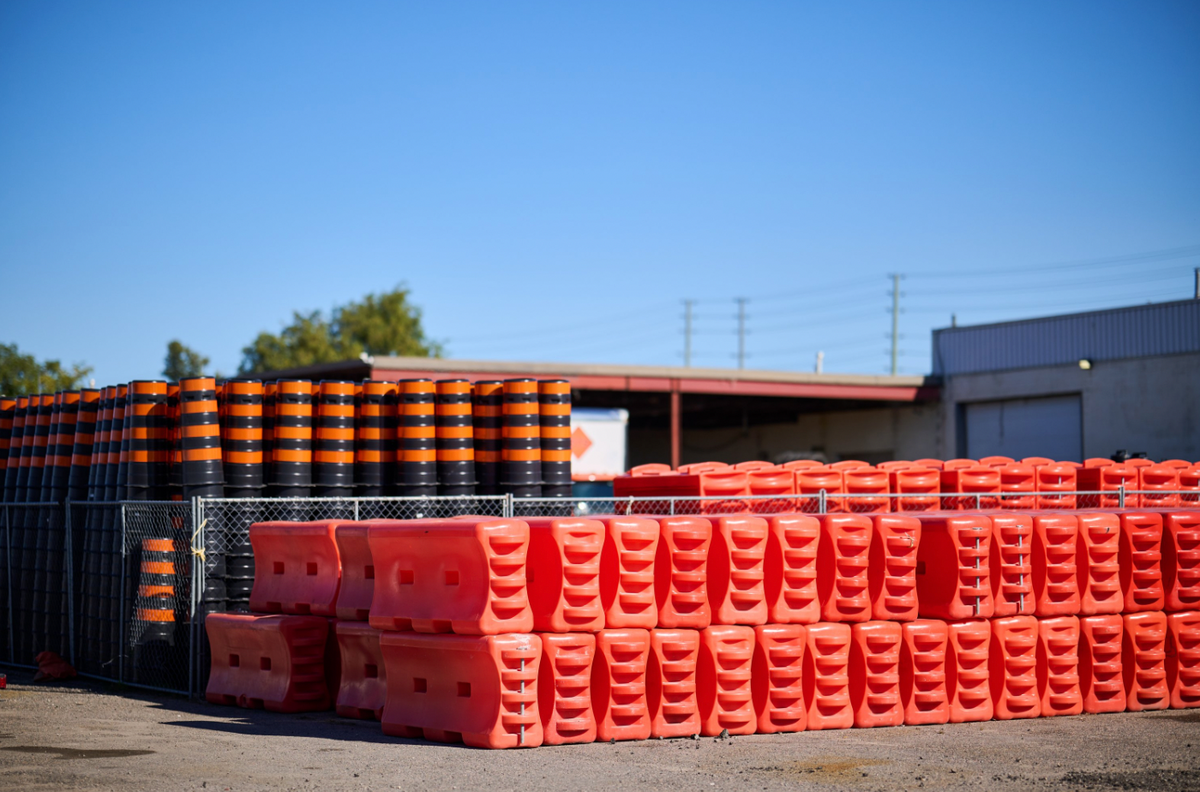
Water wall barriers are made from durable polyethylene plastic. They are lightweight when empty and become heavier when filled with water.
Unlike traditional concrete barriers, they are easier to transport and reposition before filling. Their connected sections can also accommodate different site layouts.
Barricade Traffic Services offers two options: the Water-Wall and The Sentry Water Cable Barrier.
2. When Should You Use Concrete Jersey Barriers?
Concrete barriers are a good choice for projects that require substantial physical separation between moving traffic and construction areas.
Consider using concrete jersey barriers for:
-
Highway construction: Separating active traffic lanes from construction zones.
-
Roadwork: Creating physical boundaries around road repairs and maintenance.
-
Longer-term projects: Providing a durable barrier that can remain in place throughout construction.
-
Traffic separation: Establishing clear boundaries between vehicles and restricted work areas.
The Concrete Barrier Wall (TCB) is worth considering when your project requires a heavy-duty concrete barrier system.
3. When Should You Use Water Jersey Barrier?

Water wall barriers are a practical option for projects that need temporary separation and easier transportation.
Consider using water wall barriers for:
-
Temporary construction zones: Creating boundaries around active work areas.
-
Flexible layouts: Adjusting barrier placement to suit different site configurations.
-
Easy transportation: Moving empty sections more easily before filling them with water.
-
Additional site protection: Adding chain-link fencing to the Water-Wall for extra privacy and security.
The Water-Wall features a hinged design that allows sections to pivot up to 30 degrees, making it useful for layouts that require changes in direction.
4. What Is The Sentry Water Cable Jersey Wall Barriers?
The Sentry is another water-filled barrier option offered by Barricade Traffic Services. However, it has an additional feature that separates it from a standard Water-Wall.
It contains four galvanized steel cables inside each polyethylene section. These cables are designed to help contain an impacting vehicle.
The Sentry is MASH tested, passed, and eligible for TL-3 longitudinal barrier applications. It also requires no anchors, making it an option to consider for projects such as bridge decks where anchoring may be a concern.
If your project requires a water-filled barrier with internal steel cable reinforcement, The Sentry may be the right option.
5. How Do You Choose the Right Barrier?
When comparing concrete barriers and water wall barriers, consider what your project needs most.
Choose a Concrete Barrier (TCB) if:
-
You need a heavy-duty concrete barrier.
-
Your project requires substantial physical separation.
-
You need a barrier system that meets specific project requirements for concrete barriers.
Choose a Water-Wall if:
-
You need a temporary water-filled barrier.
-
Transportation and positioning are important.
-
Your site requires flexible barrier layouts.
-
You want the option to add chain-link fencing.
Choose The Sentry if:
-
You need a water-filled barrier with internal steel cable reinforcement.
-
Your project requires a TL-3 eligible longitudinal barrier.
-
You need a barrier system that does not require anchors.
Before selecting a barrier, always consider your project's traffic control plan, installation requirements, and applicable safety standards. Not every barrier is suitable for every application.
6. Find the Right Jersey Wall Barriers at Barricade Traffic Services

Every construction project has different requirements. Whether you need concrete jersey barriers for highway construction or water-filled barriers for temporary traffic control, choosing the right system is important.
Barricade Traffic Services offers several barrier options to support construction and traffic management projects across Ontario.
Explore our products:
Contact Barricade Traffic Services to discuss your project and find the right barrier solution.